
🔱 Correct Sanskrit Mantras (Maa Durga Mantras)
1. Durga Dhyan Mantra (ध्यान मंत्र)
(Maa Durga Mantras)
Sanskrit (corrected):
ॐ कालाभ्राभां कटाक्षैररिकुलभयदां मौलिबद्धेन्दुरेखाम्।
शंखं चक्रं कृपाणं त्रिशिखमपि करैर्दूधतां त्रिनेत्राम्॥
सिंहस्कन्धाधिरूढां त्रिभुवनमखिलं पूरयन्तीं ध्यायेद् दुर्गां जयाख्यां त्रिदशपरिवृतां सेवितां सिद्धिकामैः॥
2. Durga Pranam Mantra (प्रणाम मंत्र)
(Maa Durga Mantras)
Sanskrit (correct):
ॐ सर्वमङ्गलमाङ्गल्ये शिवे सर्वार्थसाधिके।
शरण्ये त्र्यम्बके गौरी नारायणी नमोऽस्तुते॥
Meaning (Simple English Translation)
Dhyan Mantra Meaning:
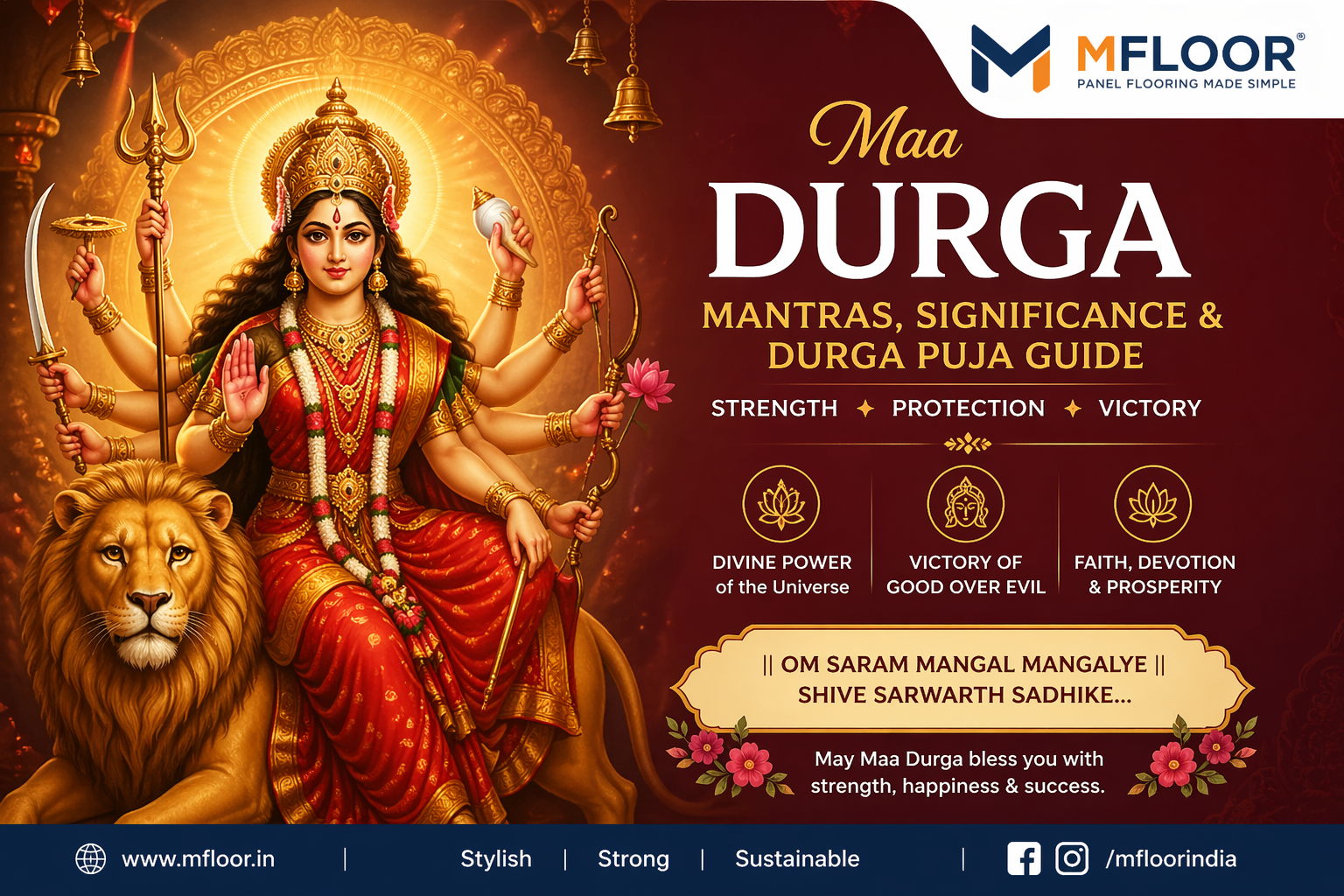
Meditate upon Goddess Durga, who shines like dark clouds, whose glance removes fear from enemies, who wears the crescent moon, holds weapons like conch, discus, sword, and trident, has three eyes, rides a lion, and protects all three worlds.
Pranam Mantra Meaning:
O Goddess, you are the source of all auspiciousness, fulfiller of all desires, the refuge of all, the three-eyed Gauri, Narayani—salutations to you.
Maa Durga and Durga Puja
Maa Durga – The Divine Power of the Universe
Durga is one of the most powerful and revered goddesses in Hinduism. She symbolizes strength (Shakti), protection, courage, and the victory of good over evil. The name “Durga” itself means “the invincible one”—a goddess who removes suffering and protects her devotees from all dangers.
She is often depicted as a radiant woman with ten arms, each holding a divine weapon gifted by different gods, riding a lion or tiger, symbolizing power and determination.
The Story Behind Maa Durga
The origin of Maa Durga is rooted in the legend of Mahishasura, a powerful demon who defeated the gods and spread chaos across the universe. Unable to defeat him individually, the gods combined their energies to create a supreme goddess—Durga.
After a fierce battle lasting nine days and nights, Maa Durga defeated Mahishasura on the tenth day, which is celebrated as Vijayadashami (Dussehra)—the victory of good over evil.
What is Durga Puja?
Durga Puja is one of the most significant festivals in India, especially in West Bengal, Assam, Odisha, and Jharkhand. It celebrates the homecoming of Maa Durga to Earth along with her children—Lakshmi, Saraswati, Ganesha, and Kartikeya.
The festival usually spans five main days:
- Shashthi – Invocation of the Goddess
- Saptami – Beginning of rituals
- Ashtami – Most sacred day (includes Sandhi Puja)
- Navami – Final worship
- Dashami – Immersion (Visarjan)
Spiritual Significance
Durga Puja is not just a festival—it is a spiritual journey. It represents:
- Inner strength over weakness
- Truth over falsehood
- Good over evil
- Faith over fear
Devotees believe that worshipping Maa Durga brings prosperity, protection, and success.
Rituals and Celebrations
During Durga Puja:
- Beautiful pandals (temporary temples) are created
- Idols of Maa Durga are artistically crafted
- Devotees perform aarti, chanting, and pushpanjali
- Cultural programs, dance, and music fill the atmosphere
- Delicious traditional foods and sweets are shared
On the final day, idols are immersed in water, symbolizing the goddess returning to her divine abode.
Why Maa Durga and is Worshipped Today
In modern life, Maa Durga represents inner empowerment. She inspires people to:
- Fight injustice
- Overcome fear
- Stay strong during challenges
- Believe in righteousness
Conclusion
Maa Durga is not just a deity but a symbol of universal energy and divine protection. Durga Puja reminds us that no matter how powerful evil seems, truth and goodness always prevail.
Chanting her mantras and remembering her divine form brings peace, strength, and positivity into life.
NOTES :- For the genuine Devotee of Maa Durga can Chant only the above mentioned Maa Durga mantra but for more Puja and vidhi the devotee must have to take Shakta diksha from proper place (Must be suggested).
the above mentioned mantra is very powerful hence the devotee must keep purity of soul and whole body and must be focused.