
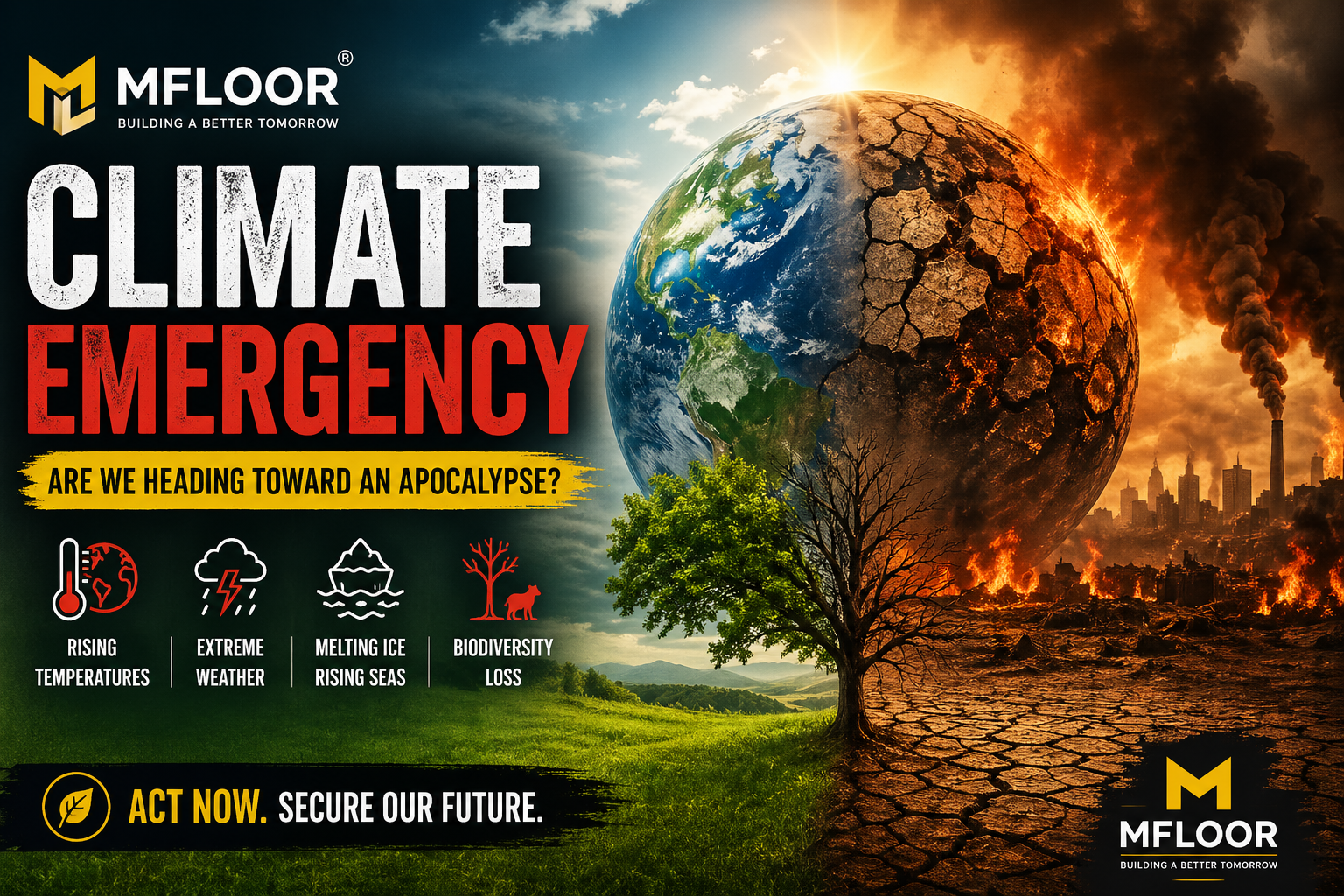
Climate Emergency: Are We Heading Toward an Apocalypse?
The idea of an “apocalypse” often brings to mind sudden, dramatic destruction. But the climate emergency unfolding today is different—it’s slower, quieter, and far more complex. Yet, its long-term consequences could be just as devastating if left unchecked.
What Is the Climate Emergency?
A climate emergency refers to the urgent and accelerating changes in Earth’s climate system caused largely by human activities. The burning of fossil fuels, deforestation, and industrial expansion have increased greenhouse gas emissions, leading to global warming and widespread environmental disruption.
At the heart of this issue is the scientific principle of the Greenhouse Effect—a natural process that has been intensified beyond safe limits due to human actions.
Signs of a Looming Climate Apocalypse
The warning signs are no longer distant predictions—they are happening now:
- Rising Global Temperatures
The planet is warming at an unprecedented rate, with recent years among the hottest on record. - Extreme Weather Events
Intensified cyclones, floods, droughts, and wildfires are becoming more frequent and severe. - Melting Ice Caps and Sea-Level Rise
Polar ice sheets are shrinking, contributing to rising oceans that threaten coastal cities. - Biodiversity Loss
Many species are facing extinction due to habitat destruction and changing ecosystems.
A stark example of climate-induced disaster is the increasing frequency of events like the Australian Bushfires 2019–2020, which devastated ecosystems and communities alike.
Human Impact: Who Suffers the Most?
While climate change affects everyone, vulnerable populations bear the brunt:
- Low-income communities with limited resources
- Coastal populations facing displacement
- Farmers dealing with unpredictable weather
- Future generations inheriting a degraded planet
Climate migration is becoming a reality, forcing millions to leave their homes due to environmental collapse.
Is It Truly an Apocalypse?
The term “apocalypse” may sound extreme, but it serves as a warning rather than a conclusion. Unlike sudden catastrophic events, the climate crisis is still within human control. The future depends on the actions we take today.
Global efforts like the Paris Agreement aim to limit global temperature rise, but progress has been uneven and often insufficient.
What Can Be Done?
Avoiding a climate apocalypse requires immediate and collective action:
- Transition to Renewable Energy
Solar, wind, and hydro power must replace fossil fuels. - Sustainable Living
Reducing waste, conserving energy, and making eco-friendly choices. - Policy and Global Cooperation
Governments must enforce strict environmental regulations. - Technological Innovation
Advancements in carbon capture and sustainable agriculture can help mitigate damage.
A Call to Action
The climate emergency is not a distant threat—it is the defining challenge of our time. While the situation is critical, it is not hopeless. Humanity still has the tools, knowledge, and opportunity to change course.
The question is not whether an apocalypse is coming—but whether we choose to prevent it.