

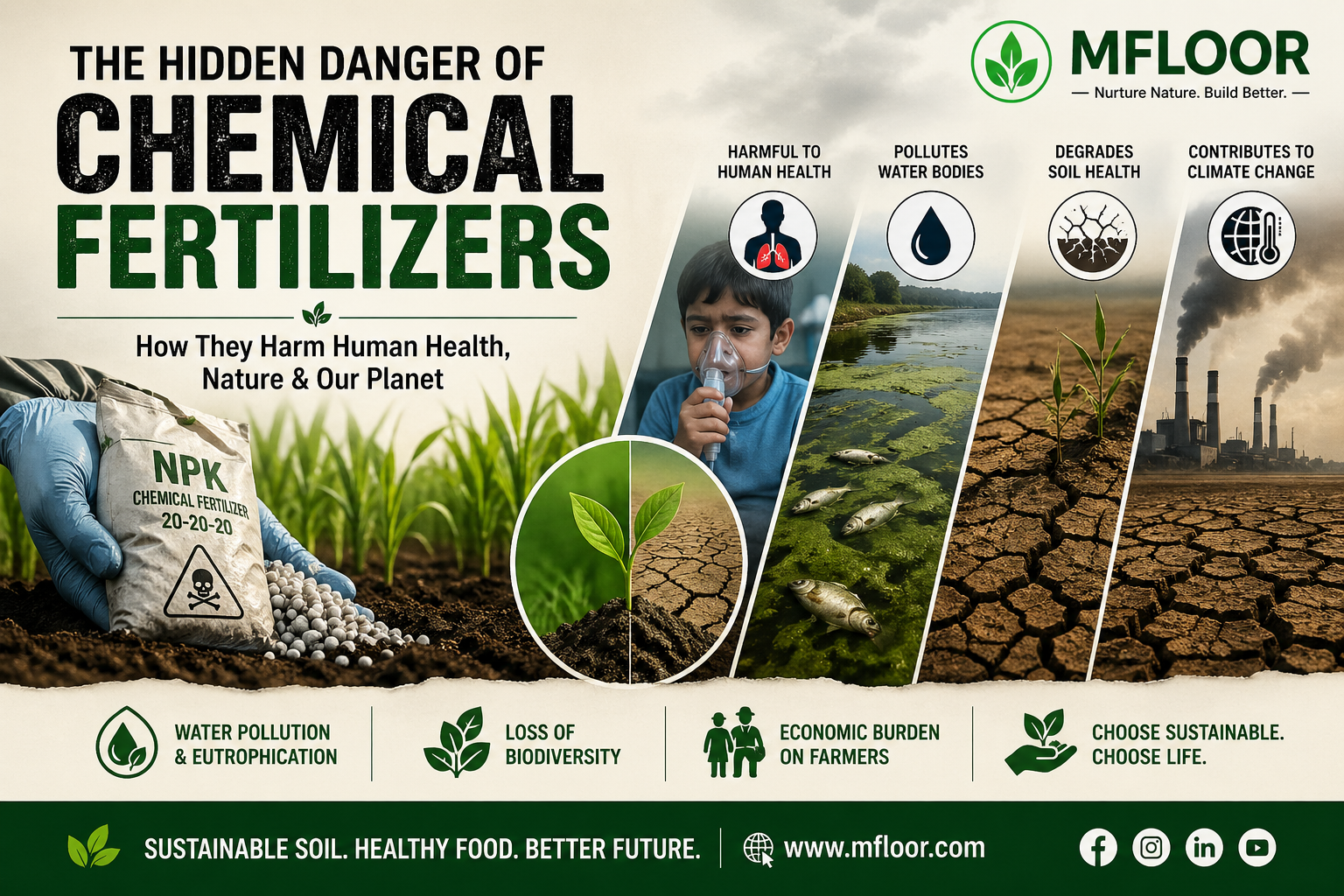
The Dangerous Impact of Chemical-Based Fertilizers on Human Life, Nature, and the Planet
Introduction
Chemical fertilizers have played a major role in boosting agricultural productivity, especially since the mid-20th century during the Green Revolution. While they have helped meet the food demands of a growing global population, their excessive and unregulated use has led to serious consequences for human health, ecosystems, and the environment at large.
This blog explores how chemical fertilizers are affecting life on Earth and why a shift toward sustainable alternatives is urgently needed.
What Are Chemical Fertilizers?
Chemical fertilizers are synthetic substances rich in essential nutrients like nitrogen (N), phosphorus (P), and potassium (K). Common examples include urea, ammonium nitrate, and superphosphate. These fertilizers are designed to provide immediate nutrients to crops, improving growth and yield.
However, their benefits often come at a hidden cost.
Harmful Effects on Human Health
1. Contaminated Drinking Water
One of the most dangerous impacts is water pollution. Excess fertilizers seep into groundwater, increasing nitrate levels. High nitrate intake is linked to conditions such as Methemoglobinemia, which reduces the blood’s ability to carry oxygen, especially in infants.
Long-term exposure may also contribute to cancers and thyroid disorders.
2. Toxic Food Chain
Chemical residues often remain in crops and enter the human food chain. Continuous consumption of such food can lead to:
- Hormonal imbalance
- Neurological disorders
- Increased risk of chronic diseases
3. Air Pollution and Respiratory Issues
The overuse of nitrogen fertilizers releases harmful gases like ammonia and nitrous oxide. Nitrous oxide is not only a greenhouse gas but also contributes to respiratory problems when present in polluted air.
Environmental Damage
1. Soil Degradation
Chemical fertilizers may initially boost soil fertility, but over time they:
- Destroy beneficial microorganisms
- Reduce soil organic matter
- Make soil acidic and less productive
Healthy soil is a living system, and chemical overload disrupts this balance.
2. Water Pollution and Eutrophication
When fertilizers run off into rivers and lakes, they cause a phenomenon known as Eutrophication. This leads to excessive algae growth, which depletes oxygen in water and kills aquatic life.
Dead zones in oceans are a direct result of such pollution.
3. Loss of Biodiversity
Chemical fertilizers negatively affect:
- Soil organisms like earthworms
- Pollinators such as bees
- Aquatic species
This leads to an imbalance in ecosystems and threatens biodiversity.
Impact on Climate and the Planet
1. Contribution to Climate Change
Nitrous oxide released from fertilizers is nearly 300 times more potent than carbon dioxide in trapping heat. It significantly contributes to global warming and climate instability.
2. Disruption of Natural Cycles
Excessive nitrogen and phosphorus disturb Earth’s natural nutrient cycles. This imbalance affects ecosystems on a global scale, contributing to environmental crises.
Economic and Social Consequences
Farmers often become dependent on chemical fertilizers, leading to:
- Increased farming costs
- Soil exhaustion over time
- Reduced long-term productivity
This creates a cycle of dependency that is difficult to break.
Sustainable Alternatives
To reduce the harmful impact of chemical fertilizers, the following alternatives can be adopted:
1. Organic Farming
Using compost, manure, and natural inputs improves soil health and reduces pollution.
2. Biofertilizers
Microorganisms that enhance nutrient availability naturally can replace synthetic inputs.
3. Crop Rotation and Mixed Cropping
These practices help maintain soil fertility without chemical intervention.
4. Integrated Nutrient Management
Combining organic and inorganic methods in a balanced way ensures sustainability.
Conclusion
While chemical fertilizers have contributed significantly to agricultural growth, their long-term effects on human health, ecosystems, and the planet are deeply concerning. From polluted water and degraded soil to climate change and biodiversity loss, the risks are widespread and serious.
A transition toward sustainable and eco-friendly agricultural practices is not just an option—it is a necessity for the survival of future generations and the protection of our planet.



It’s alarming to think how much we rely on chemical fertilizers without considering the potential health risks. I’ve read that switching to organic practices can help restore soil health—would love to see more discussion on this!
its an alarming situation, coz now the effect of that chemical reflecting on the fertility rate of soil as well as human life.