

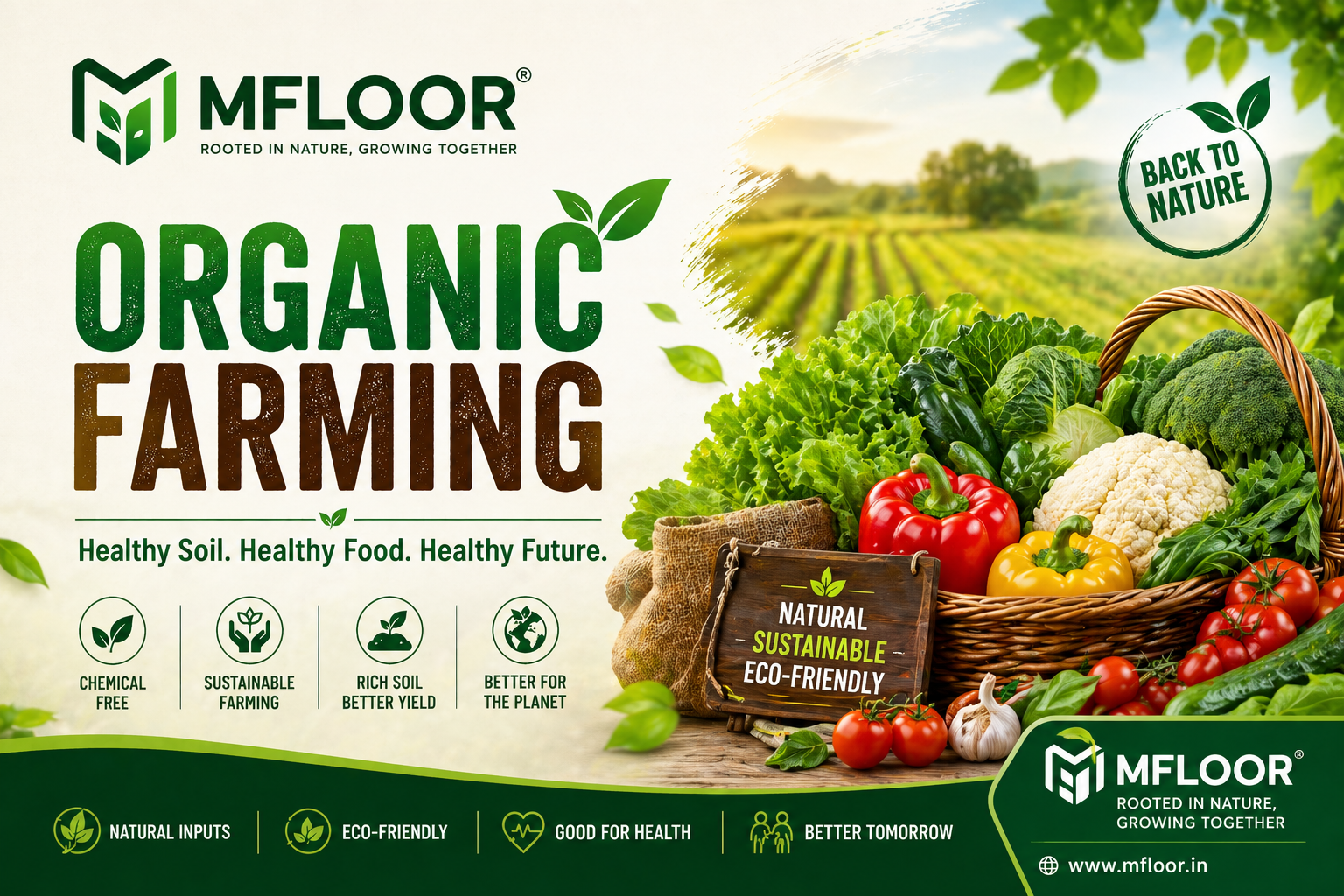
🌱 Organic Farming: A Sustainable Path to Healthy Living and a Greener Planet
Organic farming is more than just a method of agriculture—it’s a philosophy of working with nature rather than against it. In an era where chemical fertilizers and pesticides dominate conventional farming, organic farming offers a safer, eco-friendly, and sustainable alternative.
🌾 What is Organic Farming?
Organic farming is an agricultural system that relies on natural processes, biodiversity, and cycles adapted to local conditions. It avoids the use of synthetic chemicals like artificial fertilizers, pesticides, and genetically modified organisms (GMOs).
Instead, it emphasizes:
- Natural compost and manure
- Crop rotation
- Biological pest control
- Green manure and cover crops
🌍 Importance of Organic Farming
1. Protects Human Health
Organic produce is free from harmful pesticide residues and synthetic chemicals, making it safer for consumption.
2. Preserves Soil Fertility
Organic farming improves soil structure and fertility through natural composting and crop rotation.
3. Environment-Friendly
It reduces pollution of air, water, and soil, and helps conserve biodiversity.
4. Sustainable Agriculture
By maintaining ecological balance, organic farming ensures long-term productivity without degrading natural resources.
🌿 Key Principles of Organic Farming
Organic farming is guided by four main principles:
- Health: Sustaining the health of soil, plants, animals, and humans
- Ecology: Working with natural ecosystems
- Fairness: Ensuring equity and justice in farming practices
- Care: Protecting future generations and the environment
🚜 Methods and Techniques
🌱 Crop Rotation
Different crops are grown in succession to maintain soil nutrients and reduce pests.
🍃 Composting
Organic waste is decomposed into nutrient-rich manure.
🐞 Biological Pest Control
Natural predators like ladybugs are used to control pests instead of chemicals.
🌾 Green Manure
Plants like legumes are grown and plowed back into the soil to enhance fertility.
⚖️ Advantages of Organic Farming
- Produces healthier and chemical-free food
- Improves soil health and fertility
- Reduces environmental pollution
- Enhances biodiversity
- Promotes sustainable agriculture
⚠️ Challenges of Organic Farming
- Lower yield in initial years
- Requires more labor and knowledge
- Certification can be expensive
- Limited market access in some regions
🇮🇳 Organic Farming in India
India has a rich tradition of organic agriculture. States like Sikkim have become fully organic, setting an example for the world. With increasing awareness and government support, organic farming is gaining popularity among Indian farmers.
🔮 Future of Organic Farming
With rising concerns about climate change, soil degradation, and health issues, organic farming is becoming the need of the hour. Consumers are increasingly demanding chemical-free food, creating new opportunities for farmers and businesses.
🌟 Conclusion
Organic farming is not just a trend—it is a necessity for a healthier future. By adopting natural methods and sustainable practices, we can protect our environment, improve our health, and ensure food security for generations to come.