
🏙️ Real Estate Market Trends in India: 2025 Outlook & Emerging Insights
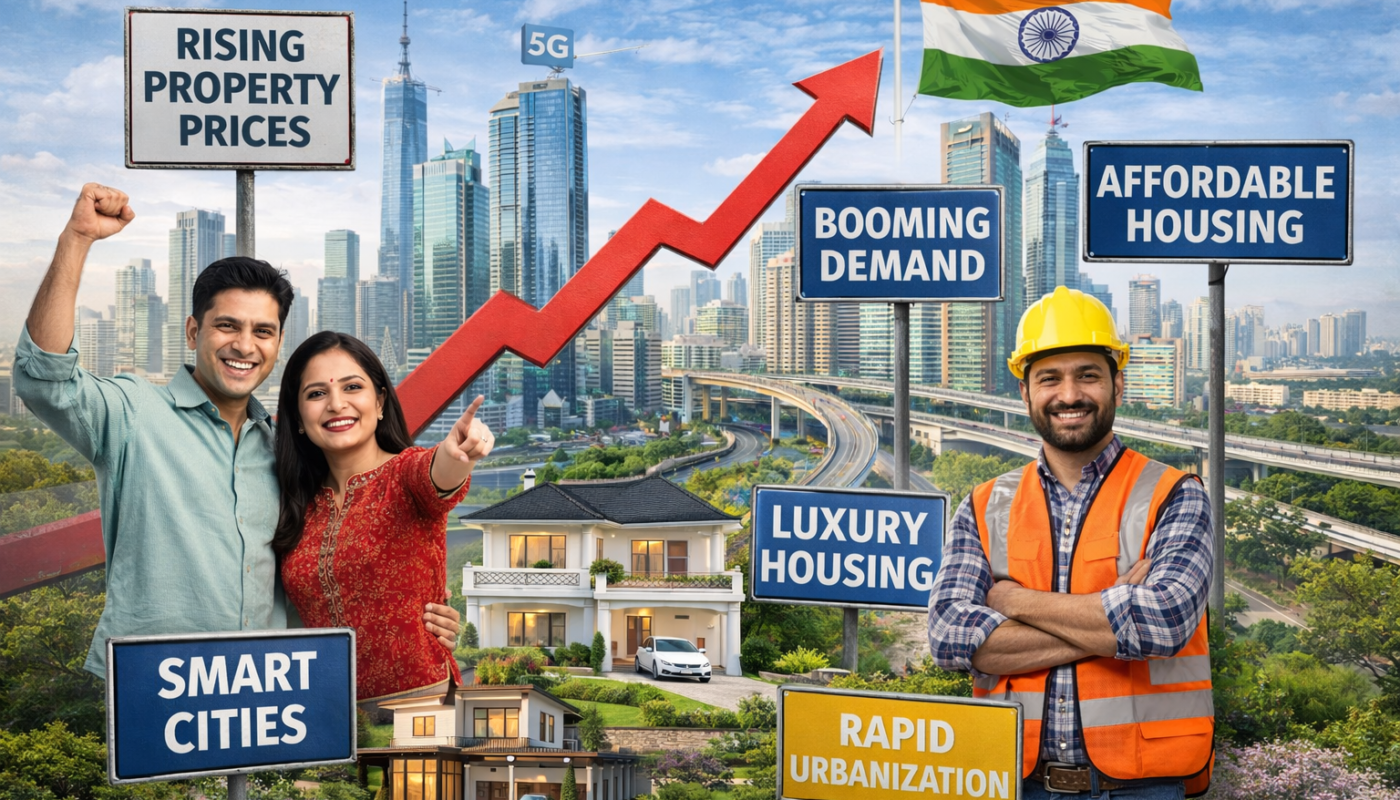
The India real estate trends is witnessing a transformative evolution in 2025, driven by strong economic fundamentals, digital adoption, infrastructure upgrades, and changing consumer preferences. From metro cities to Tier-2 and Tier-3 towns, real estate in India has become a dynamic arena offering exciting opportunities for investors, developers, and homebuyers alike.
In this blog, we explore the latest trends shaping the real estate landscape of India and what to expect moving forward.
📈 1. Continued Growth in Residential Demand
Post-pandemic recovery has accelerated housing demand, especially in urban and suburban areas. In 2025, this demand is being fueled by:
Rising disposable income
Improved job market
Low home loan interest rates (relative to historic levels)
Government schemes like PMAY and CLSS
Developers are responding with projects that emphasize affordability, smart layouts, and sustainable living. Ready-to-move-in homes and gated communities are seeing high traction.
🏢 2. Commercial Real Estate Rebounding Strongly
India’s commercial real estate market is experiencing a powerful comeback, especially in the office space and retail sectors. Key trends include:
Hybrid working models driving demand for flexible office spaces
Grade A offices in tech hubs like Bengaluru, Hyderabad, Pune, and Gurugram continuing to attract MNCs
Warehousing and logistics real estate booming due to e-commerce growth
Moreover, REITs (Real Estate Investment Trusts) have opened doors for retail investors to enter the commercial realty segment.
🌆 3. Growth of Tier-2 and Tier-3 Cities
Due to better connectivity, remote working, and affordability, smaller cities are emerging as new real estate hotspots. Cities like:
Indore
Lucknow
Bhubaneswar
Coimbatore
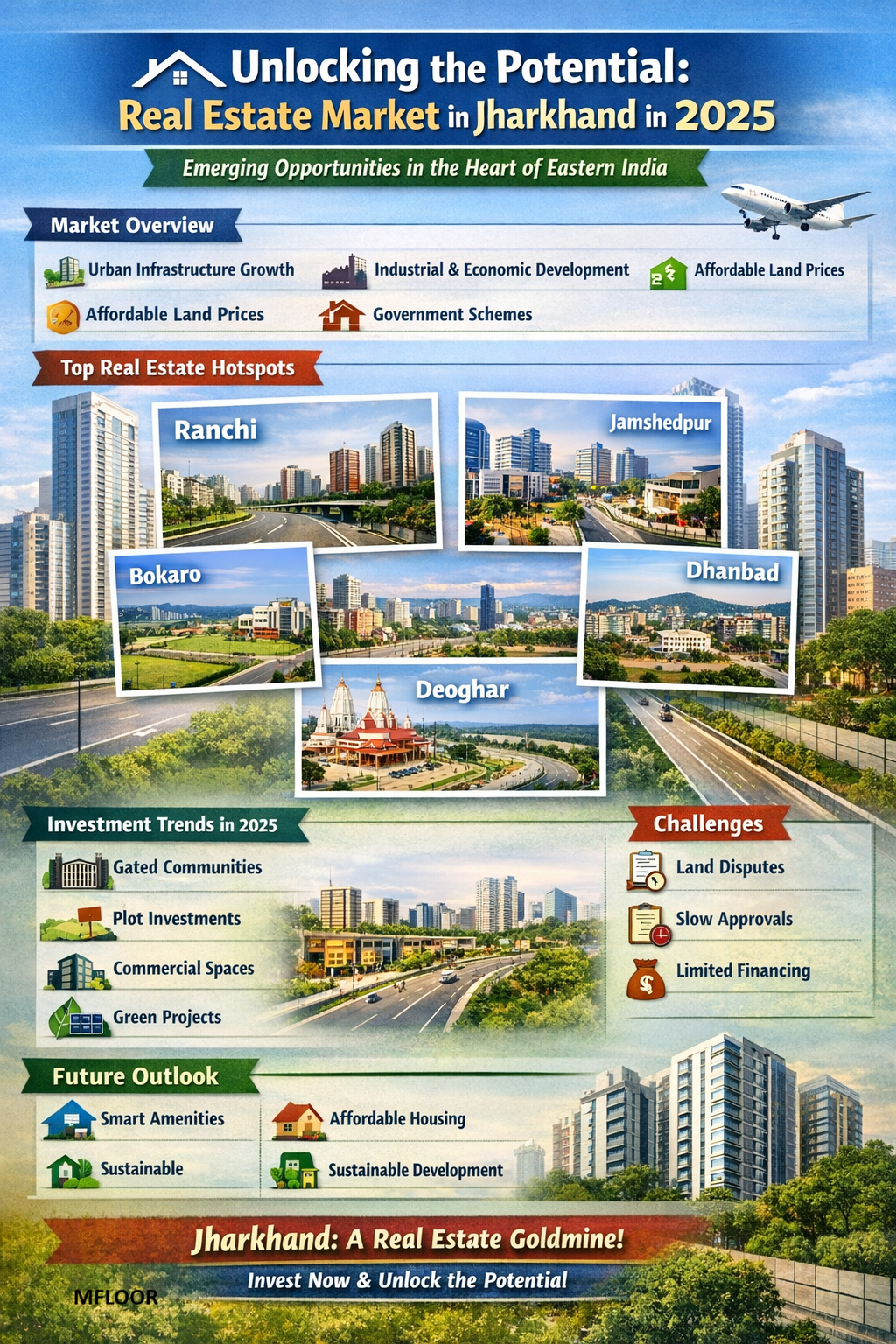
Ranchi
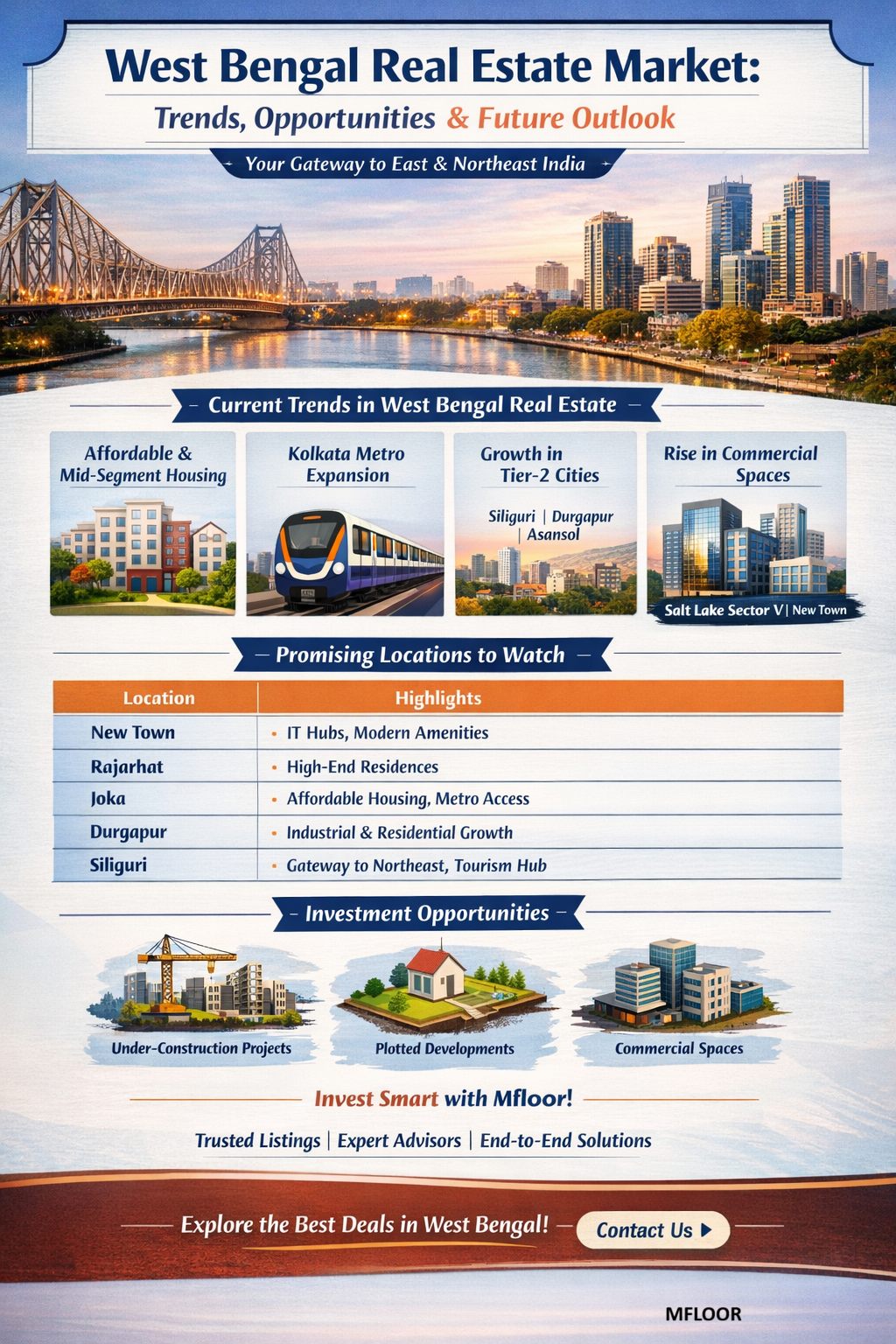
Siliguri
…are experiencing a real estate surge in 2025, especially in the mid-segment and affordable housing categories.
🌱 4. Sustainability & Green Buildings
Eco-conscious living is no longer a luxury — it’s a necessity. Developers are incorporating:
Rainwater harvesting systems
Solar panels
Energy-efficient designs
Green certifications (like IGBC, GRIHA)
Buyers are now prioritizing ESG-compliant buildings, which offer both environmental benefits and long-term cost savings.
🖥️ 5. Digital Transformation & PropTech Adoption
Digital tools are transforming how real estate is bought, sold, and managed. Key innovations include:
3D virtual walkthroughs
Online property listings and AI-powered recommendations
Blockchain for secure transactions
Smart home automation in residential projects
PropTech startups are helping bridge the gap between developers and tech-savvy homebuyers.
🛣️ 6. Infrastructure-Led Growth
Major government infrastructure initiatives such as:
Gati Shakti National Master Plan
Metro rail expansions
Smart Cities Mission
New expressways and airports
…are playing a pivotal role in boosting real estate activity in surrounding areas. Peripheral zones of metros are now becoming prime investment locations.
📊 7. Investment Opportunities for NRIs
With the Indian Rupee’s favorable exchange rate and transparency in RERA-compliant projects, NRIs are actively investing in:
Residential flats in cities like Mumbai, Delhi NCR, Bengaluru
Luxury villas and retirement homes in Goa, Kerala
Commercial spaces and rental-yield properties
📊 8. ROI in India’s Top Emerging Cities
Return on Investment (ROI) is one of the most critical factors while evaluating real estate. With rising demand, planned infrastructure, and competitive pricing, India’s emerging cities are now offering higher ROI potential than many saturated metro markets.
Here’s a breakdown of the estimated ROI in some of the most promising Tier-2 and Tier-3 cities in 2025:
🟢 1. Indore (Madhya Pradesh)
Type: Residential + Commercial
Estimated ROI: 10–14% annually (long-term)
Why: Cleanest city for 7 years, Smart City Mission, booming IT and retail sectors, metro rail, and affordable real estate prices.
🔵 2. Lucknow (Uttar Pradesh)
Type: Mid-segment housing + Retail
Estimated ROI: 9–12% annually
Why: Government capital with fast-expanding suburbs, high rental demand, major road and metro projects, IT parks under development.
🟣 3. Kochi (Kerala)
Type: High-end apartments + Co-working + Hospitality
Estimated ROI: 8–11% annually
Why: Port city, strong NRI interest, Smart City infrastructure, metro connectivity, and strong tourism sector.
🟠 4. Nagpur (Maharashtra)
Type: Plots + Industrial Warehousing
Estimated ROI: 10–13%
Why: Center of India’s logistics network, MIHAN SEZ, Metro development, upcoming airport expansion.
🔴 5. Ranchi (Jharkhand)
Type: Residential flats + Retail
Estimated ROI: 8–10%
Why: Capital city with growing middle-class population, improving connectivity, and demand for branded residential communities.
🟡 6. Bhubaneswar (Odisha)
Type: Mid-income housing + Student rentals
Estimated ROI: 9–11%
Why: Education and IT hub, rising student and migrant population, rapid Smart City development.
✅ Key ROI Drivers in These Cities:
Low acquisition cost (compared to metros)
Rising rental yields
Improved infrastructure & connectivity
Government incentives for urban growth
Inflow of industries and startups
📌 Pro Tip:
Investing in early-stage projects or pre-launch properties in these cities can yield up to 15–18% ROI in 5–7 years, especially if backed by infrastructure development like metro, expressways, or IT parks.
📊 ROI Comparison Chart – Top Emerging Cities in India (2025)
| City | Property Type | Avg. Property Price (₹/sq.ft) | Rental Yield (%) | Annual ROI Potential (%) | Growth Drivers |
|---|---|---|---|---|---|
| Indore | Residential, Commercial | ₹3,800 – ₹5,500 | 3.5% – 4.5% | 10% – 14% | Smart City, Metro, IT, Cleanest city awards |
| Lucknow | Mid-segment Housing | ₹3,200 – ₹5,000 | 3.2% – 4.0% | 9% – 12% | Capital city, Expressways, IT Parks |
| Kochi | Apartments, Co-working | ₹5,000 – ₹7,000 | 3.5% – 4.5% | 8% – 11% | Port, Metro, Tourism, NRIs |
| Nagpur | Plots, Warehousing | ₹2,800 – ₹4,200 | 3.8% – 4.5% | 10% – 13% | MIHAN SEZ, Logistics hub, Metro |
| Ranchi | Residential, Retail | ₹3,000 – ₹4,800 | 3.0% – 3.8% | 8% – 10% | Capital city, industrial corridors |
| Bhubaneswar | Mid-income, Student Rental | ₹3,200 – ₹4,500 | 3.5% – 4.2% | 9% – 11% | Education hub, Smart City mission |
📈 ROI Insights:
Highest ROI Potential: Indore & Nagpur (due to infrastructure boom and rising commercial activity)
Best Rental Yields: Kochi & Indore (student + NRI + IT segment)
Fastest Growing Markets: Lucknow & Bhubaneswar (Tier-2 expansion with smart urban planning)
💡 Recommendations Based on Investment Goals:
| Goal | Best Cities | Why |
|---|---|---|
| Long-term capital appreciation | Indore, Nagpur | Infrastructure + low base prices |
| Steady rental income | Kochi, Bhubaneswar | High rental demand from professionals & students |
| Low-budget high potential | Ranchi, Lucknow | Under ₹40 lakh range with urban migration |
| Commercial property growth | Nagpur, Indore | Demand from IT/logistics + affordable space |
💼 9. Policy & Regulatory Support
India’s real estate is benefiting from consistent policy reforms such as:
RERA (Real Estate Regulation Act) ensuring transparency and accountability
GST rationalization improving affordability
Digitization of land records simplifying transactions
These reforms have increased buyer confidence and improved ease of doing business for developers.
🔮 What Lies Ahead?
Forecast for the next 1–2 years:
Steady price appreciation in urban and suburban markets
Rise of co-living and senior living communities
Enhanced focus on mixed-use developments (residential + retail + office)
Surge in fractional ownership and REIT participation
📝 Final Thoughts
The Indian real estate market in 2025 is resilient, inclusive, and evolving rapidly. Whether you are a buyer looking for a dream home, an investor seeking long-term ROI, or a developer innovating new-age spaces — this is a great time to be involved in real estate.
Stay informed. Choose wisely. And invest in the future of India’s growth.